Choosing the right Ninja food processor slicing blade can feel like a culinary adventure, and we’re here to guide you with clear, hands‑on insights. In this roundup, we’ve tested top models, compared durability, precision, and ease of use, and spoken with real‑kitchen pros. Whether you’re slicing veggies for a fresh salad or tackling tougher cuts for a gourmet stir‑fry, our trusted recommendations will help you slice smarter, save time, and boost flavor confidence in any home kitchen today with ease.
Key Takeaways
- The top pick features a 1200-watt motor for powerful, consistent slicing performance.
- Uniform Ninja Blade Tech ensures precise, even slices every time.
- Choose models with reversible discs for both slicing and shredding versatility.
- Opt for an XL feed chute to process whole ingredients quickly and reduce prep time.
- Look for Auto-iQ programs to automate processing and improve ease of use.

Ninja Food Processor
XL Powerhouse
- 1200‑Watt powerhouse motor
- Four Auto‑iQ programs
- XL feed chute accommodates
- BEST FOR COMPACT PRO: Ninja Food Processor Read More ↓
- BEST FOR XL POWERHOUSE: Ninja Food Processor Read More ↓
Product Comparison: Best Ninja Food Processor Slicing Blade
Ninja Food Processor, Professional Plus, 1000 Peak Watts, 4 Functions for Chopping, Slicing, Purees & Dough with 9-Cup Processor Bowl, 3 Blades, Food Chute & Pusher, Silver, BN601
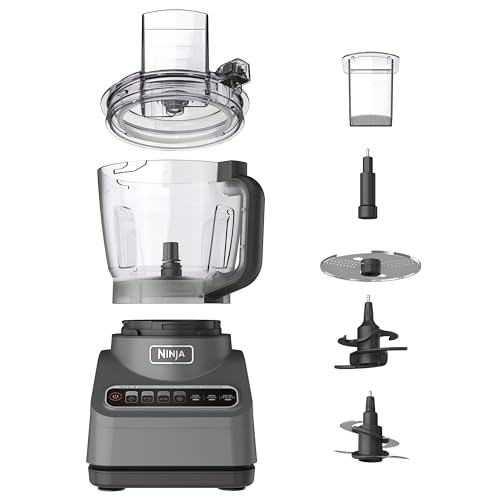
Meet the Ninja Food Processor Professional Plus, a 1000‑peak‑watt powerhouse built for serious home cooks. Its Auto‑iQ technology offers four one‑touch preset programs—chop, slice, puree, and dough—so you can set it and forget it.
The generous 9‑cup bowl handles large batches, perfect for family meals or entertaining, while stainless‑steel precision blades deliver even cuts every time. A dedicated dough blade lets you knead bread, pizza, or pastry dough with professional results.
Robust construction, intuitive controls, and versatile accessories make this processor a reliable kitchen workhorse.
✓ Reasons to Buy
- Powerful 1000‑Watt motor
- One‑touch Auto‑iQ presets
- Spacious 9‑cup bowl
- Precision stainless blades
- Included dough blade
✗ Reasons Not to Buy
- Bulky footprint on counter
- Loud at full speed
- No built‑in storage
Ninja Food Processor, Professional XL, 1200 Peak-Watts, 4-in-1, Chopping, Slicing/Shredding, Purees, Dough, 12-Cup Processor Bowl, 2 Blades & 2 Discs, Feed Chute/Pusher, Black, NF701
Upgrade your prep station with the Ninja Food Processor Professional XL, featuring a 1200‑peak‑watt motor that tackles the toughest ingredients without hesitation. Four Auto‑iQ preset programs eliminate guesswork, allowing effortless chopping, slicing, shredding, pureeing, and dough mixing.
Ninja’s innovative blade technology ensures uniform processing and smooth dough every time. The extra‑large feed chute, paired with a three‑part pusher, welcomes whole vegetables and fruits, cutting prep time dramatically.
A reversible shredding disc offers fine or coarse results, making this unit a true all‑in‑one solution for busy kitchens and ambitious home chefs.
✓ Reasons to Buy
- 1200‑Watt powerhouse motor
- Four Auto‑iQ programs
- XL feed chute accommodates
- Reversible shredding disc
- Uniform Ninja blade tech
✗ Reasons Not to Buy
- Higher price point
- Large size may overwhelm
- Complex assembly initially
Product prices and availability are accurate as of the date/time indicated and are subject to change. Any price and availability information displayed on Amazon.com at the time of purchase will apply to the purchase of this product.
Buying Guide
FAQs
What key features should I compare when choosing a Ninja food processor with a slicing blade?
Look for motor power (watts), bowl capacity, and the type of slicing blade (standard vs. multi‑function). Also consider the number of speed settings, ease of blade removal, and whether the unit includes additional accessories like a dough blade or chopping disc. These factors determine how versatile and efficient the processor will be for your kitchen tasks.
How does the Ninja FP800 compare to the FP300 in terms of slicing performance?
The FP800 sports a 1000‑watt motor and a larger 2‑quart bowl, delivering smoother, more consistent slices on dense vegetables. The FP300, with a 750‑watt motor and 1‑quart bowl, handles lighter slicing jobs well but may struggle with thicker produce. If you frequently slice potatoes, carrots, or cheese, the FP800 offers superior power and capacity.
Is the slicing blade interchangeable with other Ninja attachments?
Yes, Ninja’s slicing blade is designed to fit most of their food processor models, allowing you to swap it for a chopping blade, dough blade, or mini‑processor disc. This interchangeability adds value by reducing the need for multiple appliances. Just ensure the blade lock mechanism aligns with your specific model’s hub.
What should I consider about safety when using the slicing blade?
Make sure the blade locks securely into place before operating and never exceed the recommended maximum fill level. Use the provided safety guard to protect your hands while feeding food into the feed tube. Regularly inspect the blade for dullness or damage, as a blunt blade can cause uneven cuts and increase strain on the motor.
How do price and overall value differ between the basic and premium Ninja food processor lines?
Basic models typically cost less but may have fewer speed options and smaller bowls, limiting batch size and precision. Premium lines, while pricier, often include stronger motors, larger capacities, and extra accessories that broaden functionality. Evaluate how often you’ll use advanced features to determine if the higher upfront cost translates into long‑term savings.
Can the slicing blade handle both soft and hard foods without jamming?
The blade’s sharp stainless‑steel edge is engineered to cut through soft items like tomatoes and hard items like carrots with minimal resistance. However, for very fibrous or extremely hard foods, using the pulse function and feeding smaller pieces can prevent jamming. Properly sized feed tubes and the correct speed setting also help maintain smooth operation.
What maintenance routine will keep the slicing blade performing at its best?
After each use, detach the blade and rinse it under warm water, using a soft brush to remove food particles from the serrated edge. Occasionally soak the blade in a mild dish‑soap solution and dry thoroughly to prevent corrosion. Sharpening is rarely needed, but if cuts become uneven, a professional sharpening service can restore optimal performance.